
When homeowners think about storm damage, they usually picture baseball-sized hail smashing shingles or tree limbs crashing through roofs. But across Kansas and Missouri, wind alone can cause serious roofing damage — even when everything looks fine from the ground.
After weeks of strong spring storms across the Midwest, many homeowners are surprised to learn their roof may already be compromised without a single visible leak inside the home.
At A-R Roofing, we inspect roofs every day that appear “okay” from the driveway but have hidden wind damage that can shorten the life of the entire roofing system.
Wind Damage Isn’t Always Obvious
Unlike hail dents, wind damage can be subtle at first. A roof may not immediately leak after a storm, but strong gusts can weaken shingles, flashing, seals, and ventilation systems over time.
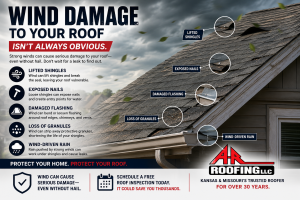
Common signs of wind damage include:
- Lifted or creased shingles
- Missing granules
- Loose ridge caps
- Bent flashing
- Exposed nails
- Separated seal strips
- Debris impact from nearby branches
- Water pushed underneath shingles by wind-driven rain
Many of these problems are difficult — or impossible — to spot safely from the ground.
Kansas & Missouri Weather Is Tough on Roofs
Homes throughout Kansas and Missouri deal with a unique mix of weather conditions:
- Sudden temperature swings
- High spring winds
- Thunderstorms
- Heavy rain
- Hail events
- Intense summer sun
- Freeze/thaw cycles in winter
Over time, these conditions wear roofing materials down faster than many homeowners realize.
Even newer roofs can sustain damage during strong wind events, especially if shingles were already aging or improperly installed.
Wind Can Break the Seal on Shingles
Most modern asphalt shingles are designed to seal tightly together. Strong wind gusts can break those seals, allowing shingles to lift repeatedly during future storms.
Once that protective seal is compromised:
- Water can work underneath the shingles
- Nails may become exposed
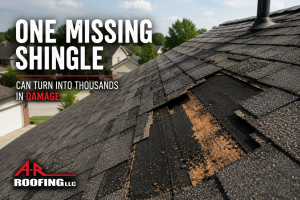
- Shingles can crease or crack
- Entire sections become vulnerable to future blow-offs
This type of damage often starts small — but gets worse with every storm season.
Wind-Driven Rain Is a Major Problem
One of the biggest hidden dangers is wind-driven rain.
During severe storms, wind can push rain sideways and upward into areas your roof normally protects against. Even without visible missing shingles, moisture can enter around:
- Chimneys
- Roof valleys
- Flashing
- Vents
- Pipe boots
- Ridge vents
Left unchecked, this can eventually lead to:
- Interior staining
- Mold growth
- Wood rot
- Insulation damage
- Decking deterioration
Premium Roofing Systems Can Help
Not all roofing systems perform the same in high-wind environments.
Many homeowners across Kansas and Missouri are now upgrading to more durable roofing options designed for better wind and impact resistance, including:
- Class 4 impact-resistant shingles
- Stone-coated steel roofing
- Composite roofing systems
- Premium architectural shingles
Products from brands like GAF and Euroshield are becoming increasingly popular for homeowners wanting both durability and curb appeal.
The Best Time for an Inspection? Before You Notice a Leak
The biggest mistake homeowners make is waiting until water appears inside the home.
By the time a leak becomes visible, damage may already exist beneath the roofing system.
A professional inspection can help identify:
- Loose or lifted shingles
- Weak areas after storms
- Ventilation concerns
- Flashing issues
- Signs of premature aging
- Storm-related damage you may not notice yourself
Trusted Local Roofing for Kansas & Missouri
For over 30 years, A-R Roofing has helped homeowners across Kansas and Missouri navigate storm damage with honest inspections, quality workmanship, and roofing options for every budget.
Whether your roof needs a simple repair, a storm assessment, or a long-term upgrade, our team is here to help — without the pressure.
Need peace of mind after recent storms?
Schedule a free roof inspection with A-R Roofing and let our team help determine whether your roof is ready for the next round of Midwest weather.
 WI
WI