When you’re comparing roofing estimates, it’s tempting to lay them side-by-side and just pick the one with the lowest number. But a seasoned, professional contractor knows something that a new homeowner might not: we can’t see what’s hidden under your old shingles.
A cheap estimate may be a sign that the contractor is either cutting corners or, more likely, setting you up for a massive “surprise” bill once the job has already started.
At AR Roofing, our goal is to eliminate surprises through education and transparency. A new roof’s price is based on two categories of “conditions”: the knowns we can see from the ground, and the unknowns we can only find during the tear-off.
Part 1: The “Knowns” That Set Your Base Price
These are conditions we can see during our initial inspection. They set the baseline for your estimate before we even lift a shingle.
- Pitch (Steepness): The steeper your roof, the more complex and dangerous the job. A low-slope, “walkable” roof is far simpler than a sharp, 12/12 pitch you’d see on a Victorian home. Steep roofs require our crews to use extra safety equipment (harnesses and roof jacks) and slow down the installation, which increases labor costs.
- Complexity: Is your roof a simple, flat “gable” roof? Or is it a complex “hip” roof with multiple dormers, valleys, and wall intersections? Every corner, valley, and penetration (like a chimney or skylight) requires more time, more detailed flashing work, and more material waste from cutting shingles to fit.
Part 2: The “Unknowns” That Can Change the Price
This is what your old roof is hiding. A professional estimate will always have line items that account for these potential issues.
The #1 Variable: Bad Roof Decking
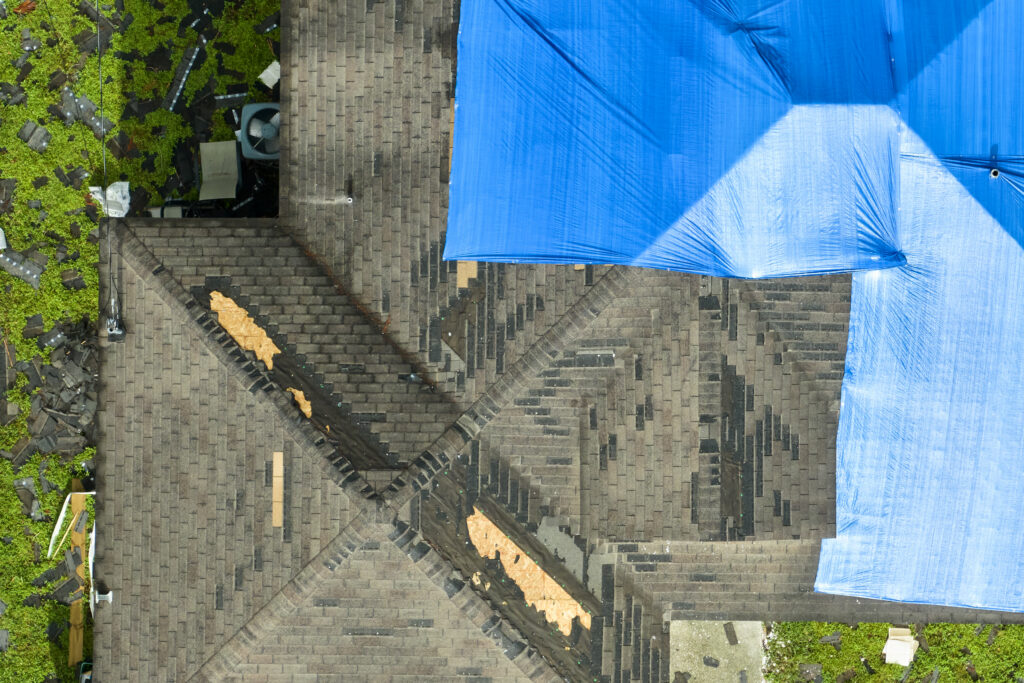
The “decking” is the wood foundation (usually plywood or OSB) of your entire roof. Your shingles are only as good as the foundation they’re nailed to. We can’t know the condition of this wood until all the old shingles are torn off.
- What we find: Soft, spongy spots, dark stains from old leaks, or delaminated plywood that is flaking apart.
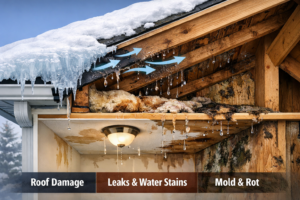
- What causes it: Slow, undetected leaks, poor ventilation that trapped moisture, or just old age.
- Why it costs more: Rotted decking must be replaced. It’s a non-negotiable part of a quality job. The new wood (measured in sheets) costs money, and the labor to cut out the old and install the new adds time to the job. AR Roofing will never nail a new 30-year shingle into a rotted board.
The #2 Variable: Multiple Layers of Old Shingles
In the past, to save money, some contractors would just nail a new layer of shingles directly over the old one. This is a terrible practice, but we won’t know if it’s been done to your home until we start the tear-off.
- What we find: Two, three, or (we’ve seen it) even four layers of old, heavy shingles.
- Why it costs more:
1. Labor: It is twice or three times the work for our crew to scrape and remove all that material.
2. Disposal Fees: Dumps charge by the ton. A three-layer roof can weigh thousands of pounds more than a single-layer roof, which dramatically increases the cost of disposal.
The #3 Variable: Poor Prior Installation & Hidden Problems
Sometimes the old roof isn’t just old; it’s bad. We may find that the previous installer cut corners, which we now have to fix. This can include non-existent flashing, improper ventilation that has caused damage, or structural issues that were simply covered up.
The AR Roofing Promise: Transparency, Not Surprises
So how do we handle these unknowns? We plan for them.
An AR Roofing contract will never be a surprise. We will explicitly state, before we start, the “per-sheet price” for any decking replacement. This is a clear, agreed-upon cost.
When our crew tears off the old roof, if they find bad decking, our on-site Project Manager will stop, take photos and videos to show you exactly what we’re seeing, and communicate the issue with you immediately.
You won’t get a mystery charge on your final bill. You’ll get a transparent, professional partner. A truly “good” estimate isn’t the cheapest one; it’s the most honest and comprehensive one.