By A-R Roofing | Trusted. Local. Since 1995.

After a strong storm moves through, most homeowners look for obvious problems first: missing shingles, water dripping from the ceiling, or gutters hanging off the house. But in our experience at A-R Roofing, storm damage is not always that easy to spot. Some of the most serious issues start small, then turn into leaks, mold, insulation damage, or structural problems weeks or months later.
If you are trying to identify the signs of storm damage or the most common signs of storm damage on roof systems, this guide will walk you through what to look for from the ground, inside your home, around your gutters, and across the roofline.
We do not recommend climbing onto your roof after a storm. Wet shingles, loose granules, and hidden soft spots can make the surface unsafe. Instead, use this checklist to inspect what you can see safely, then contact a professional if anything looks questionable.
Why Storm Damage Should Be Checked Quickly
Storm damage can happen from hail, high winds, heavy rain, flying debris, or falling branches. Sometimes the damage is obvious right away. Other times, the roof still looks mostly intact, but shingles, flashing, vents, or gutters have been weakened.
That matters because your roof is a system. Shingles shed water, flashing protects vulnerable transitions, gutters move water away from the home, and ventilation helps control moisture. If one part of that system is damaged, water can find a way in.
A quick inspection after a storm can help you:
- Catch roof leaks before they spread
- Document damage before it gets worse
- Protect insulation, drywall, ceilings, and framing
- Prevent gutter and drainage problems
- Decide whether you need repair, replacement, or a professional inspection
For broader help with roof repair, replacement, and inspections, our team can help through our residential and commercial roofing services.
Storm Damage Severity Guide: What Needs Attention First?
Not every sign of storm damage means your roof needs emergency repair, but some issues should be handled quickly before water gets inside your home. Use this severity guide to decide what to monitor, what to schedule for inspection, and what needs urgent attention.
| Severity Level | Signs to Look For | What It May Mean | What You Should Do |
|---|---|---|---|
| Monitor Closely | Small amounts of granules near downspouts, light debris on the roof, minor gutter overflow, small cosmetic dents on gutters or downspouts | The storm may have caused surface wear or minor drainage issues, but there may not be active roof damage | Take photos, clear safe ground-level debris, watch for changes after the next rain, and schedule an inspection if the issue worsens |
| Schedule a Professional Inspection | Missing shingles, lifted shingle edges, cracked or creased shingles, visible hail marks, granule loss across multiple roof areas, dented vents, loose flashing, gutters pulling away from the home | The roofing system may be weakened, even if you do not see an active leak yet | Contact A-R Roofing for a storm damage roof inspection so we can check shingles, flashing, vents, gutters, and vulnerable leak points |
| Act Quickly | Ceiling stains, musty attic odors, damp insulation, bubbling drywall, water marks near chimneys or vents, exposed nails, damaged pipe boots, blocked valleys, larger branches on the roof | Water may already be entering the home, or the roof may have damage that can spread if left alone | Document the damage, avoid climbing on the roof, move valuables away from affected areas, and schedule service as soon as possible |
| Emergency Attention Needed | Active leaking, sagging ceilings, a tree or large branch on the roof, large missing roof sections, visible structural damage, water near electrical fixtures, major storm openings in the roof | Your home may have an active water intrusion or safety risk | Stay out of unsafe areas, avoid wet electrical fixtures, protect the interior only if it is safe, and call for emergency roofing help immediately |
This table is a general guide, not a substitute for a professional inspection. Storm damage can be hidden under shingles, around flashing, inside attic spaces, or behind interior stains. If you are unsure whether the damage is minor or serious, it is safer to have the roof inspected before the next storm makes the problem worse.
Common Signs of Storm Damage on a Roof
Below are the most common things we look for when inspecting a roof after severe weather.
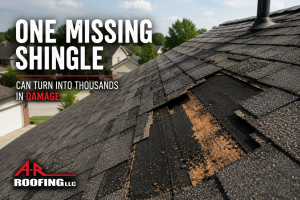
1. Missing, Lifted, or Displaced Shingles
High winds can pull shingles loose, lift their edges, or remove them completely. From the ground, you may notice:
- Bare-looking patches on the roof
- Shingles that appear uneven or out of place
- Corners lifting away from the roof surface
- Shingles lying in the yard
- Exposed underlayment or darker roof sections
Even one missing shingle can create an entry point for water. Lifted shingles are also a concern because they may no longer seal properly. They can look minor from the ground, but they may allow wind-driven rain to get underneath the roof covering.
If shingles are missing or visibly loose, schedule a storm-related roof inspection instead of waiting for a leak to appear. Our storm damage roofing team can check whether the damage is isolated or part of a larger roofing issue.
2. Granule Loss on Shingles
Asphalt shingles have protective granules on the surface. These granules help protect the shingle from sun exposure, weather, and wear. Hail and heavy rain can knock granules loose.
You may see granule loss as:
- Dark or shiny spots on shingles
- Uneven-looking patches across the roof
- Excess granules in gutters or downspouts
- Sand-like material near the base of downspouts
Some granule loss is normal as a roof ages, but sudden heavy granule buildup after a storm can be a sign of impact damage. If granules are missing, shingles may age faster and become more vulnerable to cracking, curling, and leaking.
3. Hail Bruising or Impact Marks
Hail damage can be difficult to identify from the ground. On asphalt shingles, hail may leave soft bruised areas, circular impact marks, missing granules, or dark spots. On metal vents, flashing, or gutters, it may leave small dents.
Signs of hail damage may include:
- Round dark marks on shingles
- Random impact patterns across the roof
- Dents on roof vents or metal flashing
- Dings in gutters or downspouts
- Cracked or split shingles
Hail damage is not always cosmetic. When hail weakens the shingle mat underneath the surface, the shingle may lose its ability to protect your home properly. If your neighborhood had hail, it is worth having the roof inspected even if you do not see a leak.
4. Cracked, Torn, or Creased Shingles
Strong wind can bend shingles backward, crease them, or tear them. Hail can also crack shingles, especially older or more brittle roofing materials.
Look for:
- Horizontal crease lines
- Split shingles
- Jagged edges
- Shingles that no longer lie flat
- Pieces of shingles in the yard
Creased shingles are especially important because the damage can break the shingle’s structure. Once that happens, the shingle is more likely to fail during the next storm.
5. Damaged Flashing Around Roof Penetrations
Flashing protects some of the most leak-prone areas of the roof, including chimneys, skylights, vents, valleys, and walls where the roof meets another surface. Storms can loosen, bend, or separate flashing.
Possible flashing problems include:
- Gaps around chimneys or vents
- Bent metal near roof transitions
- Loose sealant
- Rusted or lifted flashing
- Water stains near fireplaces, skylights, or walls
Flashing damage is one of the storm damage signs homeowners often miss because it may not be visible from the ground. But when flashing fails, water can enter around some of the most vulnerable parts of the roof.
6. Sagging or Soft-Looking Roof Areas
A sagging roof area should be taken seriously. Storms can expose existing structural issues or make water damage worse. Heavy rain, trapped moisture, or fallen debris may also contribute to sagging.
Watch for:
- Uneven rooflines
- Dips in the roof plane
- Areas that appear wavy or sunken
- Interior ceiling sagging
- New cracks near ceilings or upper walls
If you notice sagging, do not climb onto the roof. A soft or weakened roof deck can be dangerous. Call a professional as soon as possible.
7. Debris on the Roof
Branches, leaves, and other debris can damage shingles during a storm. Debris can also trap moisture against the roof surface or block valleys and gutters.
After a storm, check for:
- Large branches on the roof
- Piles of leaves in valleys
- Debris around chimneys, skylights, or vents
- Scratched or scraped shingles
- Blocked drainage paths
Even if the debris looks harmless, it may have caused impact damage when it landed. It can also hide problems underneath.
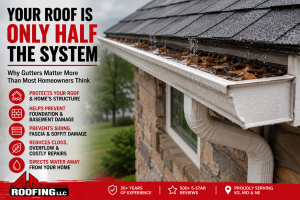
8. Dented, Bent, or Loose Gutters
Your gutters can tell you a lot about what happened during a storm. Hail, falling branches, and high winds can dent gutters, pull them away from the fascia, or clog them with shingle granules and debris.
Look for:
- Dents in gutters or downspouts
- Gutters pulling away from the house
- Loose gutter brackets
- Overflowing water during rain
- Granules collecting in the gutter system
- Downspouts that are clogged or disconnected
Gutter problems can cause water to back up under the roof edge or pool around the foundation. If your gutters were damaged in the same storm that affected your roof, it is smart to inspect both systems together. A-R Roofing can help with storm-related gutter repair and replacement when your drainage system is no longer working properly.
9. Water Stains on Ceilings or Walls
Interior water stains are one of the clearest signs that storm damage may have allowed water into the home. Stains may appear right after a storm or develop slowly over time.
Check inside your home for:
- Brown or yellow stains on ceilings
- Streaks on walls
- Damp spots around light fixtures
- Peeling paint
- Bubbling drywall
- Water marks near chimneys or vents
A small stain can point to a larger hidden leak. Water may travel along rafters, insulation, or framing before it appears inside the living space, so the visible stain may not be directly under the roof damage.
10. Musty Odors or Damp Attic Insulation
Not every leak creates a visible ceiling stain right away. Sometimes the first clue is a musty smell or damp insulation in the attic.
If it is safe to check your attic, look for:
- Wet insulation
- Dark stains on roof decking
- Musty odors
- Mold-like discoloration
- Dripping around nails or vents
- Daylight showing through roof gaps
Attic moisture after a storm should not be ignored. It can affect indoor air quality, insulation performance, and the wood structure supporting your roof.
11. Damage Around Roof Vents, Pipe Boots, and Exhaust Caps
Roof penetrations are common leak points. Storms can crack rubber pipe boots, loosen vent covers, or damage exhaust caps.
Common signs include:
- Cracked rubber around plumbing vents
- Loose or missing vent covers
- Bent exhaust caps
- Exposed fasteners
- Water stains near bathroom fans or vent lines
These details may seem small, but they protect openings in the roof. If they fail, water can enter quickly during heavy rain.
12. Exposed Nails or Loose Fasteners
Storms can shift roofing materials and expose nails or fasteners. Exposed nails may rust over time and create leak points.
Look for:
- Nails backing out of shingles or flashing
- Missing sealant over fasteners
- Loose metal components
- Small holes where fasteners were pulled out
These issues are usually repairable when caught early, but they can lead to water intrusion if left alone.
What to Do After You Notice Signs of Storm Damage
If you see possible damage, the next steps matter. Here is what we recommend:
- Stay off the roof. Inspect from the ground or from inside the attic if it is safe.
- Take photos of visible damage, including shingles, gutters, debris, and interior stains.
- Write down the date of the storm and what you noticed afterward.
- Check gutters and downspouts for granules, dents, and clogs.
- Look inside for ceiling stains, damp drywall, or musty smells.
- Schedule a professional roof inspection before small problems spread.
- Avoid temporary DIY repairs unless needed to prevent immediate water entry.
If damage is confirmed and repair or replacement is needed, we can also walk you through available roofing financing options so you can plan the work without delaying necessary protection for your home.
When Storm Damage Is an Emergency
Some storm damage can wait for a scheduled inspection. Other signs need urgent attention.
Call for help quickly if you notice:
- Active leaking
- Sagging ceilings
- A tree or large branch on the roof
- Missing roof sections
- Water near electrical fixtures
- Large areas of missing shingles
- Visible structural damage
- Interior dripping during or after rain
If water is entering your home, move valuables away from the affected area, place a container under active drips if it is safe, and avoid touching wet electrical fixtures or outlets.
Do You Need a Roof Inspection After Every Storm?
Not every storm causes roof damage. But if your area had hail, high winds, flying debris, or heavy rain, a professional inspection is a smart step, especially if your roof is older or you notice any of the warning signs above.
A roof can look fine from the driveway while still having lifted shingles, bruised shingles, loose flashing, or damaged vents. That is why we look at the entire roofing system, not just the obvious spots.
At A-R Roofing, we inspect storm damage with the goal of giving homeowners clear, practical answers. If the roof only needs a small repair, we will tell you. If the damage is more widespread, we will explain what we found and what options make sense.
Schedule a Storm Damage Roof Inspection
If you are seeing signs of storm damage around your home or possible signs of storm damage on roof surfaces, do not wait for a small issue to become a larger repair.
A-R Roofing can inspect your shingles, flashing, gutters, vents, roofline, and interior leak indicators to help determine whether your home has storm-related damage. We serve homeowners across Kansas, Missouri, Nebraska, and Oklahoma with roofing, storm damage repair, gutters, and exterior protection services.
To get help after severe weather, contact A-R Roofing for a professional storm damage inspection and honest recommendations for your home.
Contact A-R Roofing & Exteriors today to schedule your roof inspection and protect your home in Kansas, Nebraska, Oklahoma, or Missouri.