When you’re getting estimates for a new roof, comparing the final numbers can be confusing. Why is one so high? Why is another so low?
The truth is, a quality roof‘s price is based on much more than just shingles. At AR Roofing, we believe in transparency, and that means helping you understand what’s actually in your estimate.
Not all bids are created equal. Here are the 5 key factors that will have the biggest impact on the cost of your project.
1. Total Size (Measured in “Squares”)
This is the most obvious starting point. A bigger roof requires more of everything. In roofing, we measure size in “squares” (a 10×10 foot area). A larger roof directly increases your cost in three ways:
-
More Materials: More shingles, underlayment, and ice & water shield.
-
More Labor: It simply takes our crew more time to tear off and install a 35-square roof than a 20-square roof.
-
More Disposal: Landfills charge by weight, and a larger roof means (literally) tons more old material to haul away.
2. Complexity & Pitch
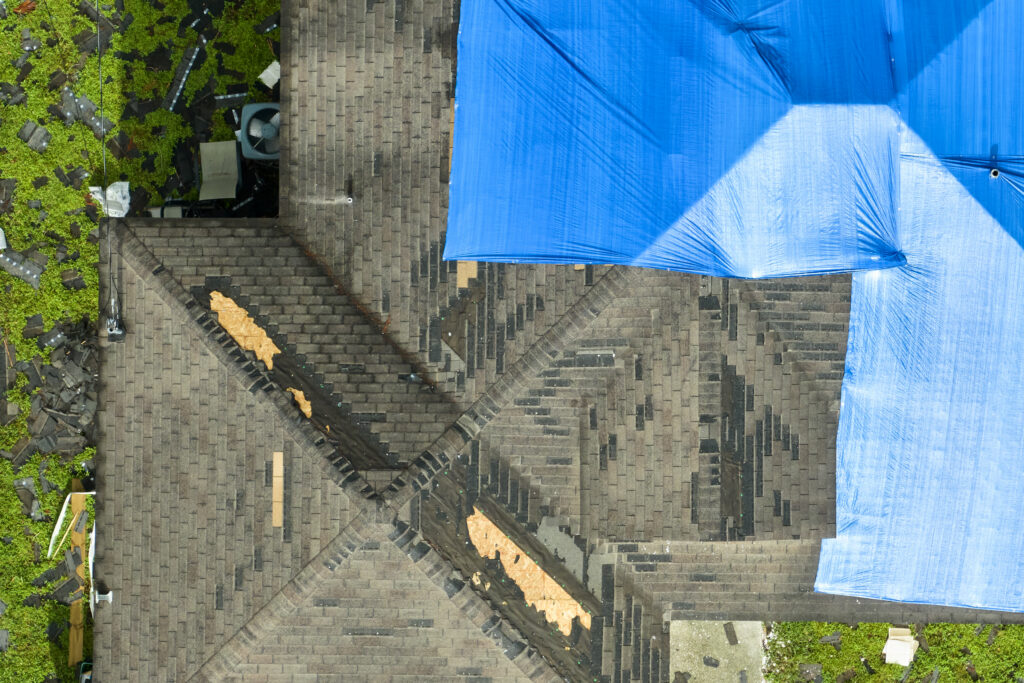
This is where you see the biggest price difference between two homes of the same size. “Complexity” is the roofer’s term for how difficult your roof is to install.
-
Pitch (Steepness): Is your roof a low-slope, “walkable” surface? Or is it a steep-pitch roof that requires our crew to use special safety harnesses and staging? A steep roof is a slower, more dangerous, and more complex installation, which increases labor
-
costs.
-
Features: Is your roof a simple, flat rectangle, or is it “cut-up” with dormers, valleys, skylights, and chimneys? Every corner, valley, and penetration (like a chimney) requires intricate, highly skilled flashing work to prevent leaks. This takes significantly more time and expertise than a simple, flat roof.
3. The Hidden Condition of Your Roof Decking
This is the #1 “unknown” that can change a price. The decking is the wood foundation of your roof (plywood or OSB) that the shingles get nailed to. We cannot see its condition until after the old roof is torn off.
-
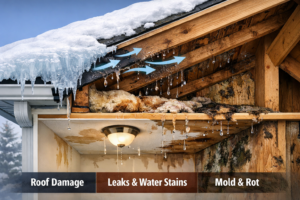
If we pull back the old shingles and find the decking is soft, rotted, or water-damaged, it must be replaced.
-
At AR Roofing, we will not install a new
-
30-year roof on a bad foundation—the nails wouldn’t hold, and your new roof would fail. A good estimate will always include a clear, per-sheet price for this possibility, so you are never surprised.
4. Your Shingle & Material Choices
The shingle you choose is a major factor. You are not just buying a “shingle”; you are buying into a system.
-
Good (3-Tab Shingle): This is the basic, flat, 20- to 25-year shingle. It’s the most affordable option.
-
Better (Architectural Shingle): This is the industry standard and what AR Roofing installs most. These are thicker, laminated shingles with a 30- or 50-year life and a beautiful, dimensional look. They offer far better wind resistance and durability.
-
Best (Premium Designer): These are luxury shingles that mimic the look of slate or wood shakes. They are the thickest, heaviest, and most expensive options.
-
The system under the shingle (e.g., a standard synthetic underlayment vs. a premium ice & water shield) also affects the final price.
5. The Contractor You Hire (Insurance & Legitimacy)
This is the one you control. If you get one “cheap” bid that is thousands less than the others, it’s almost always because that contractor is cutting a critical corner. They are likely missing one of two things:
-
Proper Insurance: General Liability and Worker’s Compensation are expensive, but they are non-negotiable. They protect you from being sued if a worker gets hurt or if your property is damaged. A contractor without them is a massive risk.
-
A Real, Local Company: Are they a “storm chaser” working from a truck, or are they a legitimate business like AR Roofing with a permanent office? A local company will be here for you in 5, 10, or 20 years to service your warranty. A cheap, uninsured contractor won’t.
-