The Hidden Components That Protect Your Home Every Day
When most people look at a roof, they see one thing: the shingles. But shingles are only the outer layer of a much larger system designed to keep your home dry, energy-efficient, and structurally sound.
In fact, some of the most important parts of your roof are completely hidden from view. These components work together to protect your home from rain, wind, ice, and extreme temperatures. If even one of them fails, it can lead to leaks, mold, wood rot, or costly repairs—even if your shingles still look great.
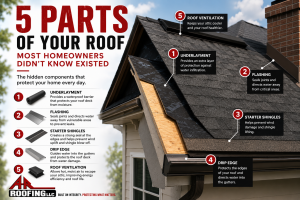
Here are five critical parts of your roof that most homeowners never see, but should absolutely know about.
1. Underlayment – Your Roof’s Second Line of Defense
Think of underlayment as a waterproof barrier that sits directly beneath your shingles. If wind-driven rain, hail, or damaged shingles allow water to get past the outer layer, the underlayment helps prevent that moisture from reaching the wood decking below.
Modern synthetic underlayments are much stronger and more durable than the traditional felt paper used years ago. They resist tearing during installation, shed water more effectively, and provide an extra layer of protection during severe weather.
While homeowners rarely see this material, it’s one of the biggest factors in how well a roof performs over time.
2. Flashing – The Unsung Hero of Leak Prevention
If there’s one roofing component responsible for preventing the majority of leaks, it’s flashing.
Flashing is made from metal and is installed anywhere the roof meets another surface, including:
- Chimneys
- Skylights
- Plumbing vents
- Roof valleys
- Dormers
- Sidewalls
These areas are naturally vulnerable because water changes direction around them. Properly installed flashing channels water away before it can seep into your home.
Unfortunately, flashing is also one of the most common places where poor workmanship shows up. Improper installation or aging sealants can allow moisture to sneak into places homeowners can’t see until damage has already occurred.
3. Starter Shingles – The Foundation of Wind Resistance
Starter shingles aren’t designed to be seen—but they play a huge role in keeping your roof intact during high winds.
Installed along the edges of the roof, starter shingles create a secure seal beneath the first row of visible shingles. This helps prevent wind from getting underneath the roofing system and lifting shingles during storms.
Without properly installed starter shingles, even premium roofing products may not perform as designed.
In areas like Kansas, Missouri, and Nebraska, where strong wind events are common, this small detail can make a significant difference in your roof’s long-term durability.
4. Drip Edge – Small Metal, Big Protection
Drip edge is a thin strip of metal installed around the perimeter of your roof.
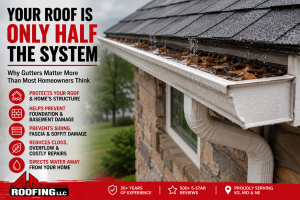
Its job sounds simple: direct rainwater away from the roof and into the gutters. But its benefits go much further.
Drip edge helps:
- Protect roof decking from water damage
- Reduce moisture along the roof edge
- Prevent wind-driven rain from reaching exposed wood
- Improve the overall lifespan of your roofing system
Homes without properly installed drip edge often experience premature wood rot along the roof’s edge—a repair that can become expensive if left unnoticed.
5. Roof Ventilation – The Part That Works Year-Round
Many homeowners are surprised to learn that ventilation has a major impact on the lifespan of their roof.
A properly ventilated attic allows hot, humid air to escape while drawing in cooler outside air. This constant airflow helps regulate attic temperatures throughout the year.
Without adequate ventilation, excessive heat and moisture can:
- Shorten shingle life
- Increase cooling costs
- Cause mold and mildew
- Damage insulation
- Lead to warped roof decking
Roof ventilation is one of the most overlooked aspects of roofing, yet it plays a critical role in protecting both your roof and your home’s energy efficiency.
A Roof Is More Than Just Shingles
While shingles receive most of the attention, they’re only one piece of a complete roofing system.
The hidden components beneath and around your shingles often determine how well your roof stands up to years of weather, temperature changes, and storms. That’s why two roofs with the exact same shingles can perform very differently depending on the quality of the installation and the materials used underneath.
At A-R Roofing, we believe every roof should be built as a complete system—not just a layer of shingles. From premium underlayment and proper flashing to starter shingles, drip edge, and balanced ventilation, every detail matters.
Whether your roof is due for replacement or you simply want the peace of mind that comes with a professional inspection, our team is here to help.
Because the best roofs aren’t defined by what you can see—they’re built on everything you can’t.